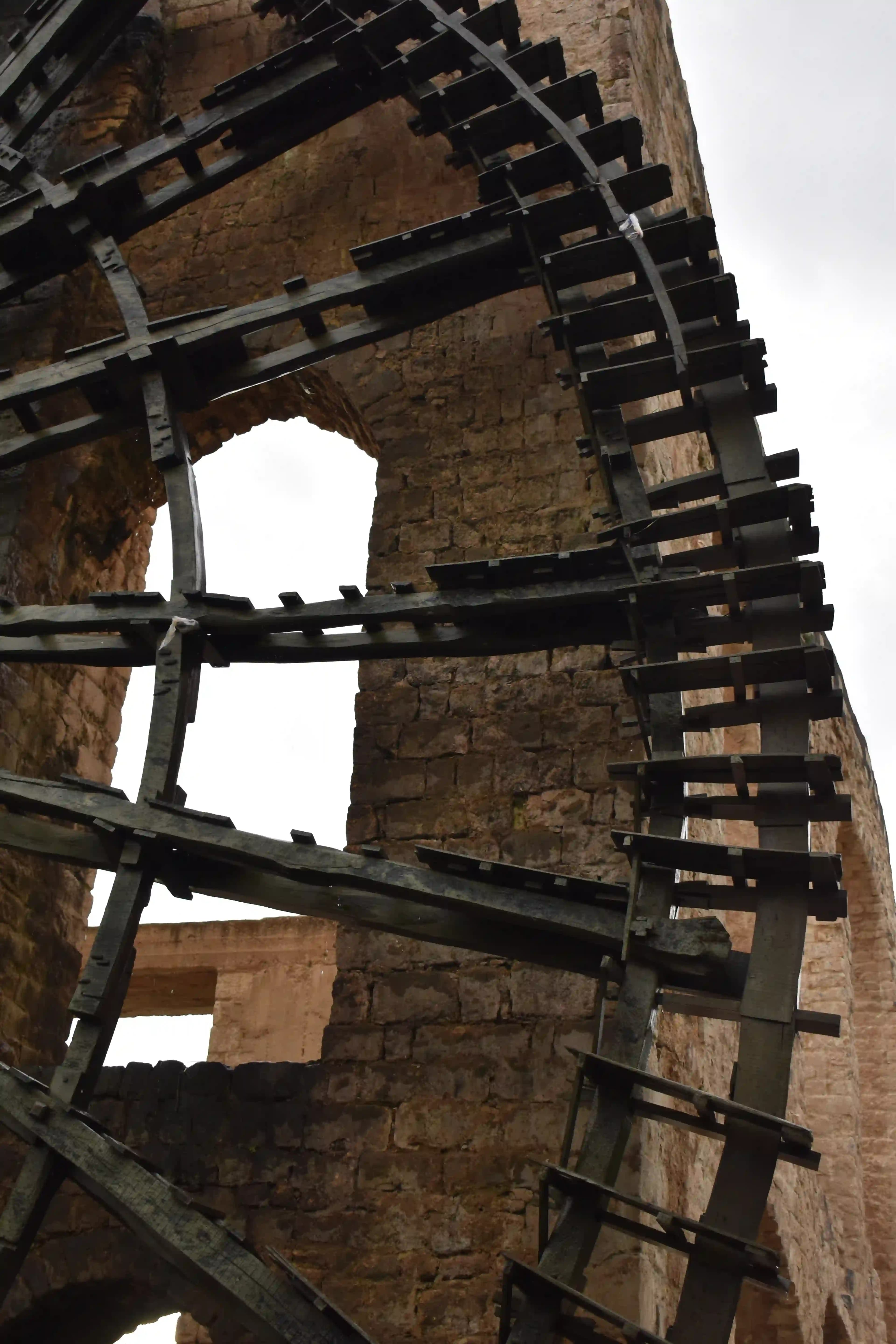
Giant wooden wheels have lifted the waters of the Orontes for more than seven centuries, turning the groan of their timber into the soundtrack of an entire city.
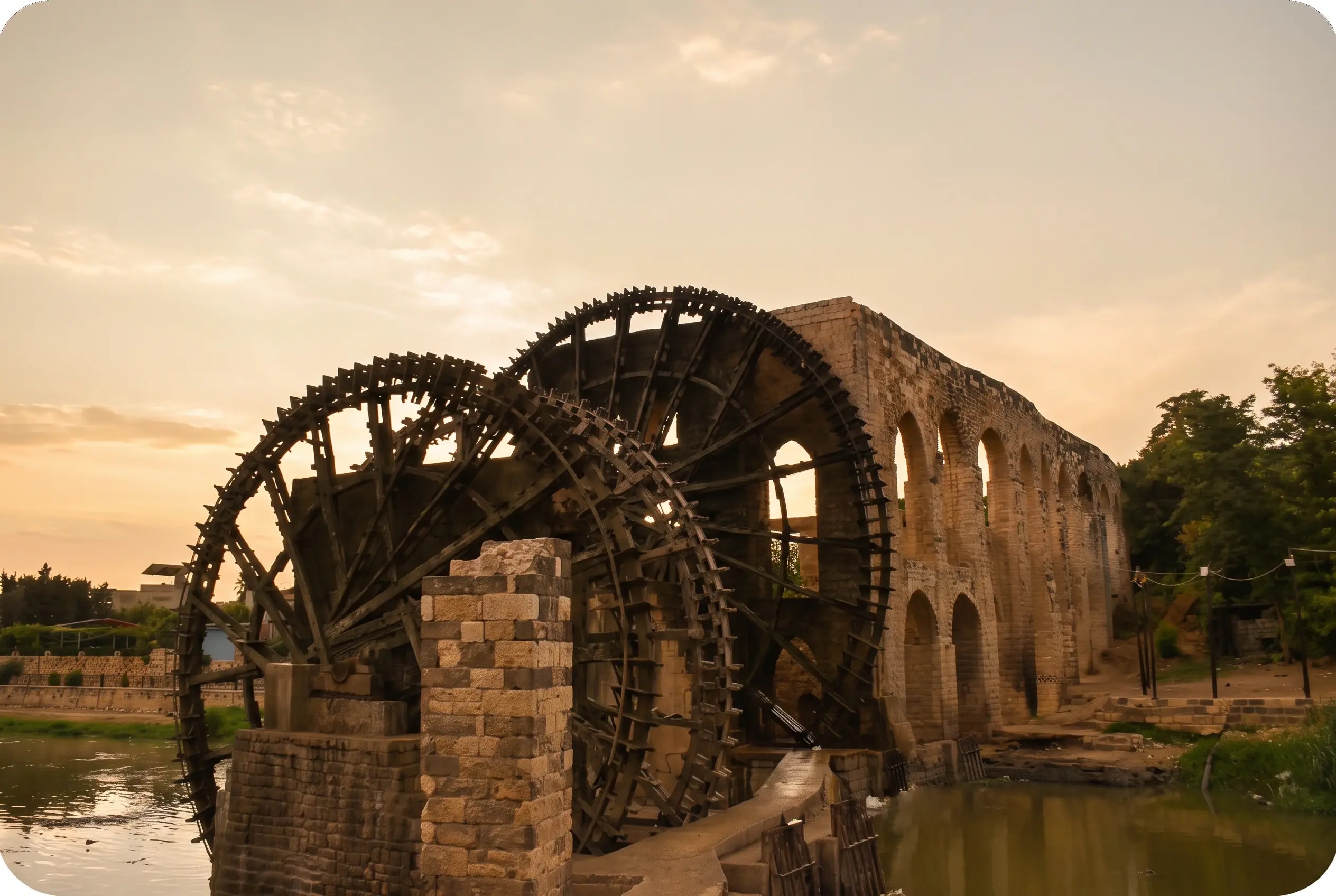
The wheels line both banks as the Orontes runs south to north through Hama, gathered at five main points, each tied to a quarter or landmark of the old city.
Where the Orontes cuts through Hama, its bed sits lower than the orchards around it. So the city's builders devised a solution as simple as it is beautiful: giant wooden wheels turned by the current alone, lifting water in buckets that tip at the top of each turn into a stone aqueduct, carrying it on to gardens, mosques, bathhouses and homes.
These machines were never just irrigation tools — over time they became the city's own pulse. They take their Arabic name, noria, from the groan (na'eer) their ancient timber makes as it turns, day and night — a sound locals say never quite leaves you, even in sleep.
The earliest known reference to similar machines in the region is a 4th-century Roman mosaic found at Apamea — a hint at how deep the idea's roots run in the Orontes valley.
The craft
A craft passed hand to hand
Maintaining the wheels is still known locally as the kashta, a routine carried out roughly every two years to replace worn timber and keep each wheel in balance. Only a handful of Hama families still carry the craft forward, generation after generation, often working high above the river with the same simple tools their grandfathers used centuries ago.
The massive axles are cut from walnut for its strength, while poplar wood is used for most of the rest of the frame, held together with iron nails that keep the structure intact through constant day-and-night rotation.
A 1930 study estimated that a single wheel, at full capacity, could move around 45 litres of water per second — enough to irrigate 25 hectares of farmland.